
In Hamilton, there are two options for one’s life: glory or obscurity. Alexander Hamilton, a young immigrant from the Caribbean bursting with brains and ambition, knows that fact far too well. His own mother died in obscurity; his father was known for shame, not glory. At the end of the day, Hamilton wants to be known and respected in the crazy world of pre-Revolution America. The only problem is that, as George Washington reminds the audience, actors in history so rarely have any control in how they are remembered.
Not Hamilton, though. He scoffs at powerlessness and refuses to settle for mediocrity. Hamilton’s convinced that–unlike his seemingly-timid fellow politician Aaron Burr–he’s not going to give up his shot for fame.
No matter the consequences, Alexander decides, the name “Hamilton” will be remembered as something, someone, glorious.
‘Non-Stop’
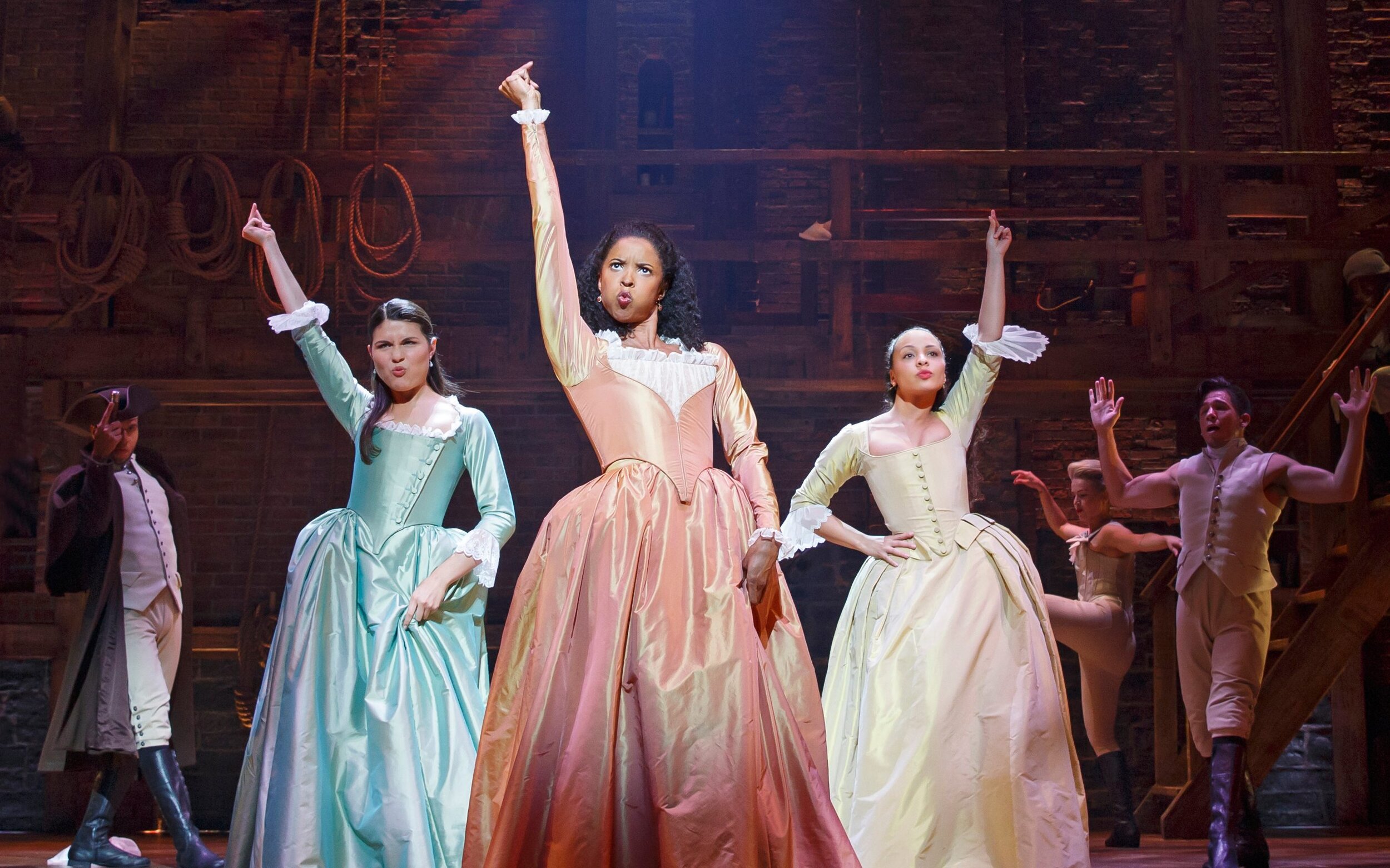
Alexander Hamilton, as depicted in the musical, is as much a force of nature as the lightning that struck ole Ben Franklin’s kite. He’s witty, outrageous, and irreverent yet painfully honest. He admits to all his friends that he doesn’t have
a dollar to my name
An acre of land, a troop to command, a dollop of fame
All I have’s my honor, a tolerance for pain
A couple of college credits and my top-notch brain
Hamilton’s a Founding Father with a messy history, more-than shaky credentials, and a fire in his belly to establish a nation built on freedom. In other words, he’s juggling a LOT.
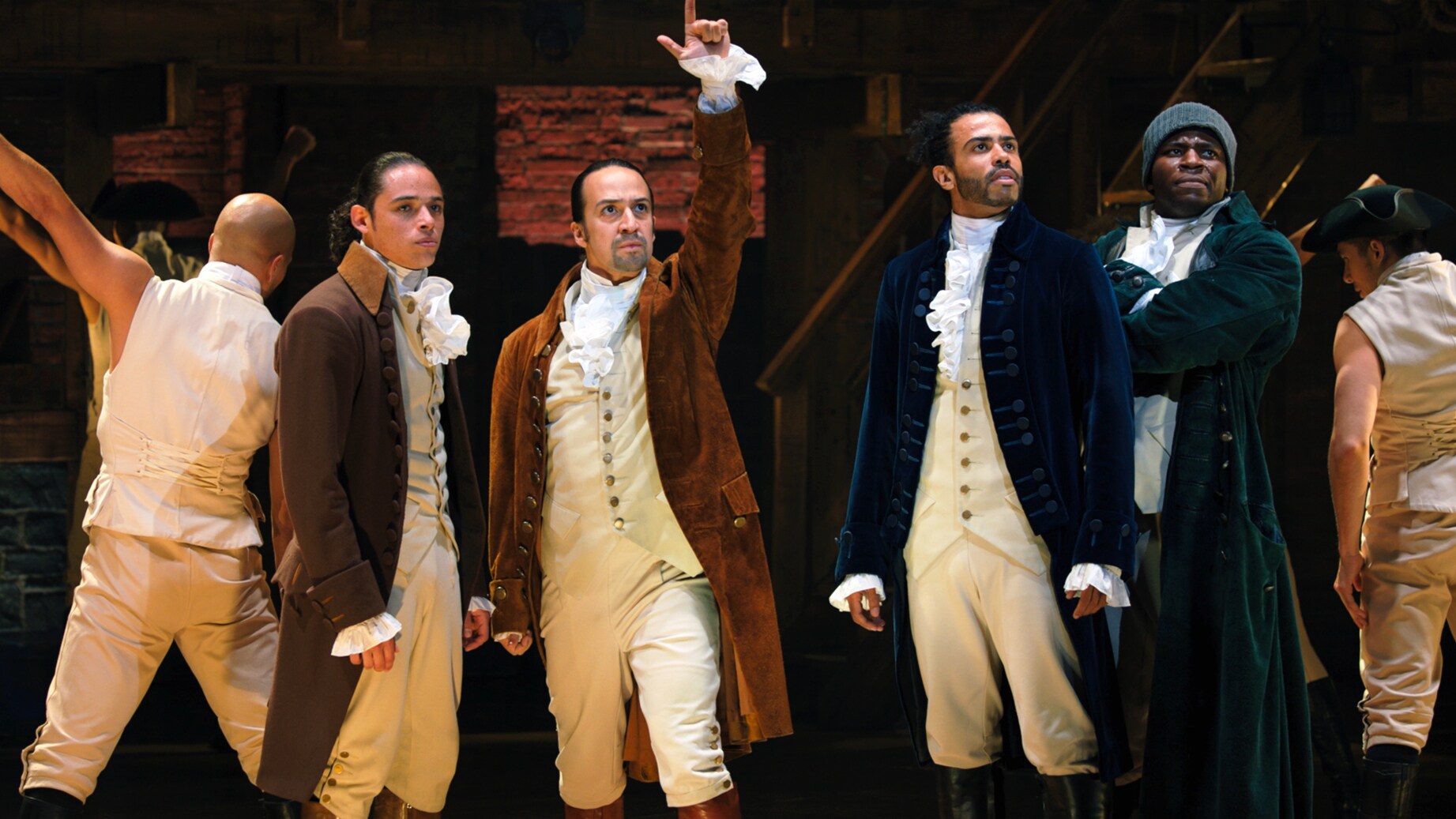
But the play’s writer (and main actor) Lin-Manuel Miranda, makes sure to let us know that Hamilton’s not slowing down. Unlike the cautious antagonist Aaron Burr, Hamilton’s career and personal life becomes more explosive as time wears on. From the American Revolutionary War, to Hamilton’s marriage and the birth of his son, to private scandal and public confrontation, Hamilton’s ambition for glory only grows.
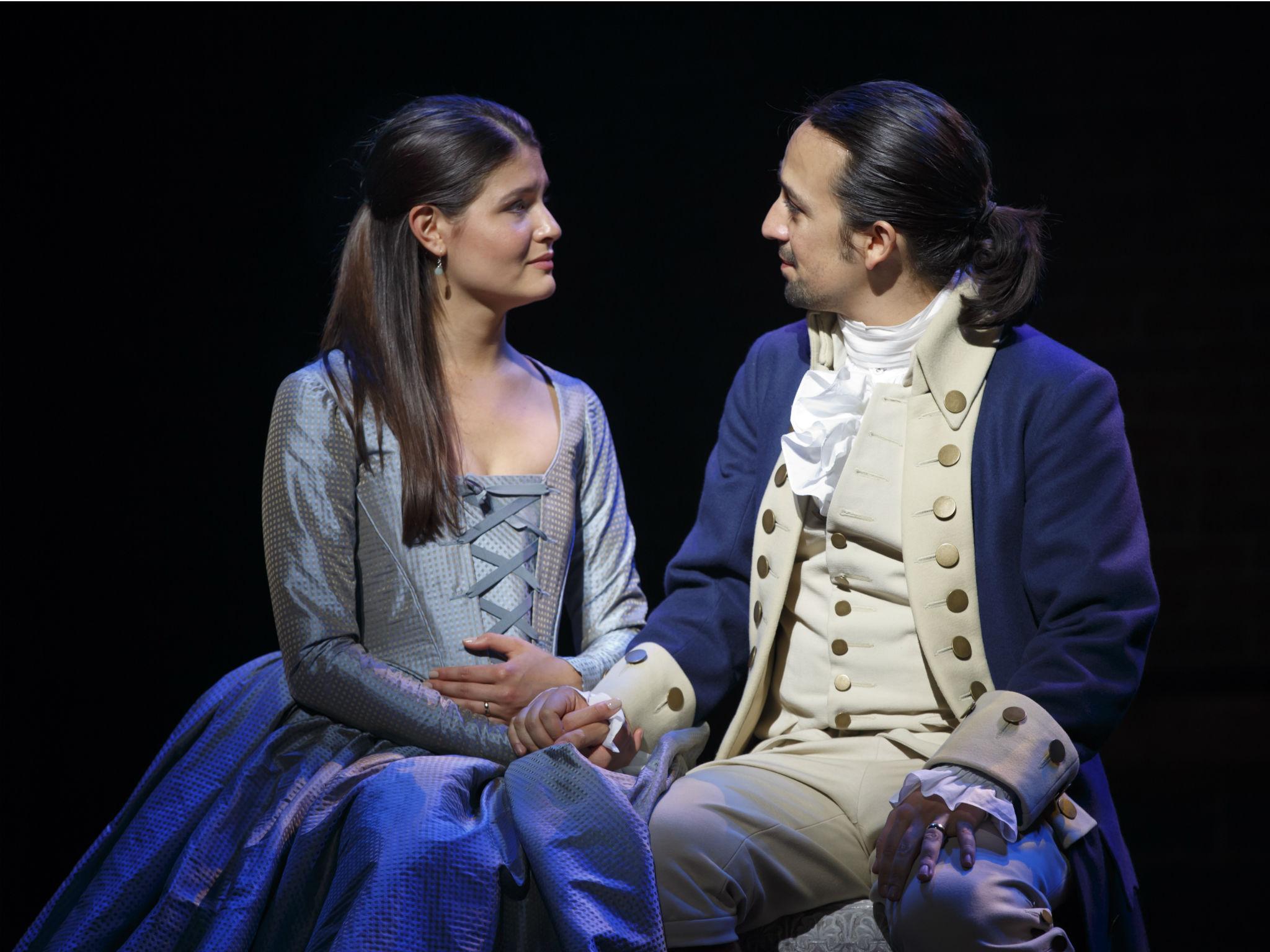
Until the unexpected happens. When a devastating tragedy strikes Hamilton, he begins to ask what it was all for. What is glory, anyway?
Making History
Hamilton’s a refreshingly fun and deeply moving piece of art that has profoundly changed the theater and how modern audiences view history. (Although it’s important to note Hamilton’s not always family friendly). It’s got a lot going for it: amazing costumes, brilliant storytelling, and stirring lyrics that are simultaneously powerful and genius (I’ve got to respect an artist who can find a slant rhyme for the word “intransigent.”) The play unsurprisingly connects with a lot of people on a personal level as it uses a fresh synthesis of pop and rap to tackle issues of racial equality, personal fulfillment, the reality of grief, and the human-wide ache for meaning.
Whew, it’s a lot. But, in the words of Aaron Burr, “You ready for more yet?”
‘diametrically opposed, Bros’
In Hamilton, we are given two characters that start out on the same journey but end in very different places. While Hamilton and Burr both long to leave a legacy glorious enough to echo through history, only one finds fulfillment. The other find a life as empty as the recently fired gun still clenched in his hand.

In Hamilton, we see a very real darkness of suffering that obscures Hamilton’s once bright hopes for the future. Adultery, grief, and the death of a loved one wakes up Hamilton more than any other bullet-filled battle in his storied life. Both in the Broadway production–and in real life–Hamilton experiences God’s presence in a shocking plot-twist. Unlike the proper, formal, Founding Father-ish religion that prevailed in the day, Hamilton appears to have come smack-in-the-face with a Gospel as real and earnest and paradigm shifting as a play with rapping Revolutionaries.
Such a transformation gives Hamilton a new lens to see his life–and a fresh perspective on throwing away his shot.
one shot
The poignant irony of Hamilton is one of the many reasons its fans adore it. In a twist of words, Hamilton goes from an ambitious upstart unwilling to throw away his shot at glory, to a grief-humbled father and husband unwilling to fire a literal deadly shot at his political enemy.
In a moving ending, (no less so for its fame), Aaron Burr and Alexander Hamilton face off in a deadly duel. Each have traveled a long road in their political careers and personal lives. They both started off searching for glory. Aaron Burr never received help; Hamilton learned to trust “a grace too powerful to name.”
Hamilton, of course, throws away his shot in the dual–and the rest is history.

conclusion
Hamilton makes the point again and again: glory or obscurity–what will your life be known for? At the same time, the greatest plot twist in Hamilton is just what glory really means. For Alexander, it ultimately meant laying down his gun and bringing his overwhelming load of heartache and fear to Jesus. It’s a message hidden beneath the lines and limelight, but one that reverberates in every chord nonetheless.
Perhaps the choices aren’t glory or obscurity–perhaps the choices are Aaron Burr or Alexander Hamilton. And maybe that’s a really good thing.⭐
Thanks for joining us this week as we took a (slightly intense) musical journey to the past. I hope that the story of Hamilton, fictional and real, reminds you that God isn’t waiting for us to be perfect for us to seek Him. Jesus welcomes everyone who comes!
Join us next week as we explore the true meaning of treasure (of course accompanied by a llama, a society of bears, and Peruvian marmelade). See you next time! 🙂
Credits: feature image from Esquire, edited in Canva.
Many lyrics quoted and referenced from Hamilton by Lin-Manuel Miranda (2015).


 Joy H. Books
Leave a reply to Benjamin Cancel reply