
literary analogies
never tasted so sweet
Willy Wonka of chocolatey fame didn’t always have an impossible candy factory powered by pure imagination. According to legend, Wonka used to be a kind, naive young man, one who spent seven years of his life searching the open ocean for the perfect, most magical chocolate recipes.

In order to fulfill his childhood dream of sharing with the world his mother’s special love for chocolate, Wonka has to set anchor in a city known for its aspiring entrepreneurs, lavish lifestyle, and the restaurant culture epicenter, the Galerie Gourmet. Unfortunately, for the unflaggable Wonka, however, there’s a sinister underbelly in this new city.
It turns out, not everyone believes in the magic of pure imagination.
sour center
Within a day of arriving in the city that will hopefully be the home of his chocolate shop, Wonka’s own bright view of the world grows a little dim. His personal philosophy is one of friendship, kindness, and creativity. Within 24 hours of docking at the port, however, Wonka discovers a world rife with torn-apart families, homelessness, a chocolate cartel, corrupt police, and a surprisingly sophisticated case of fraudulent misrepresentation (and irritatingly small fine print). For a guy whose job description is designing enchanted chocolate to make people happy, finding himself in indentured servitude at a laundromat with a handful of similar unfortunate souls is a strange twist of fate.
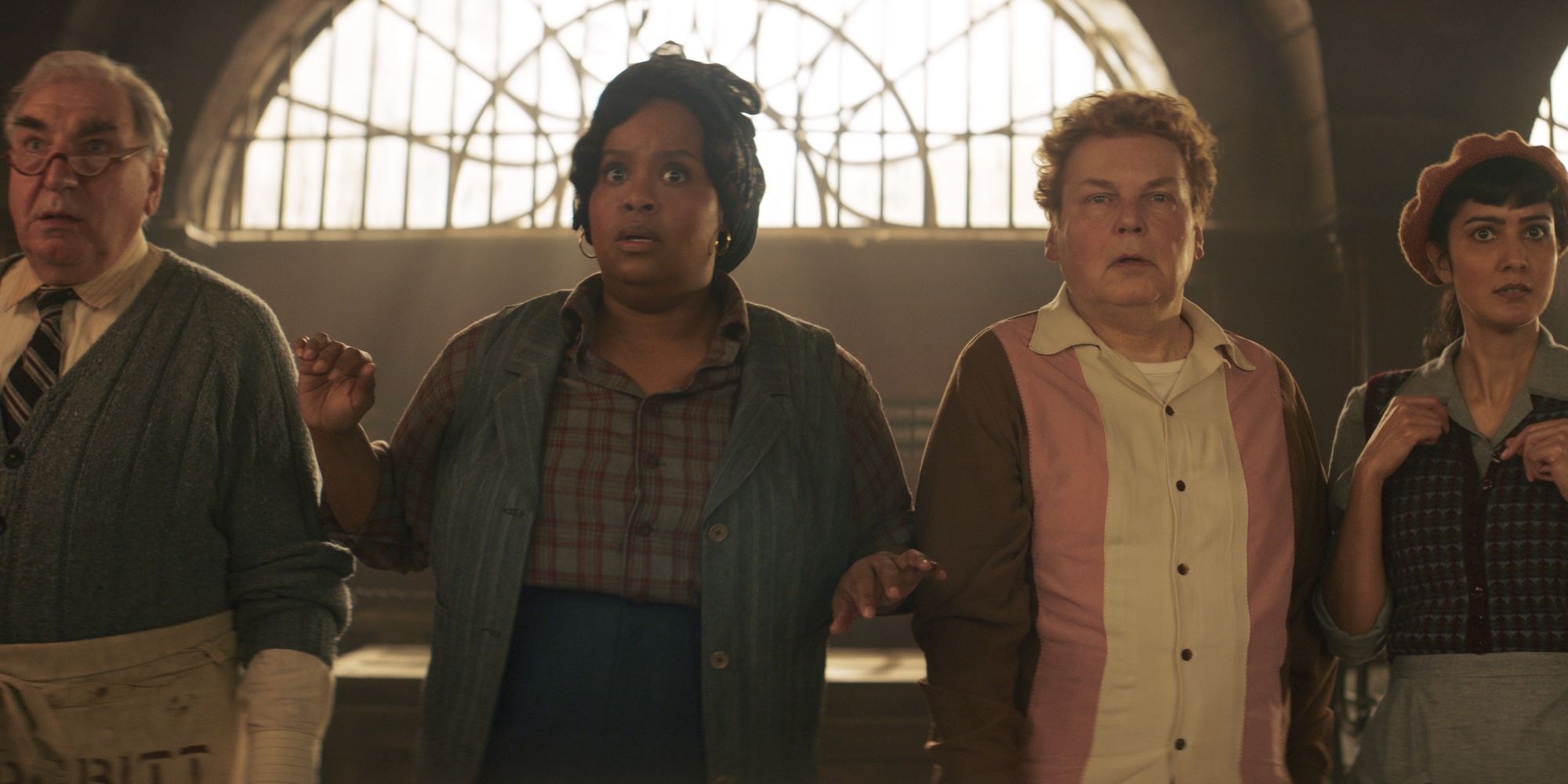
The other people tricked into labor at the laundry shop are jaded, though. Unlike Wonka, his similarly duped companions have accepted their fate sudsing up coats and dresses to pay off their debts. For Wonka, however, defeat is never the answer. When life gives lemons, Wonka’s solution is to make the greatest metaphorical lemon drops this world has ever seen.
And, hopefully in the process, drag his new down-on-their-luck friends into the sunshine.
The scoop: sweety & Salty
Wonka is a magical story undeniably sweet–and more so because of all the sour Willy and the gang are forced to endure. The world of the beloved chocolatier is as enchanted as fans of the 1970’s film remember. It’s an even more gilded, kinder, and softer-around-the-edges film than Gene Wilder’s take so many love. Wonka’s ability to see fun and beauty in the most unjust of situations is a sweet takeaway that comes as a breath of fresh air in our too-bitter reality.
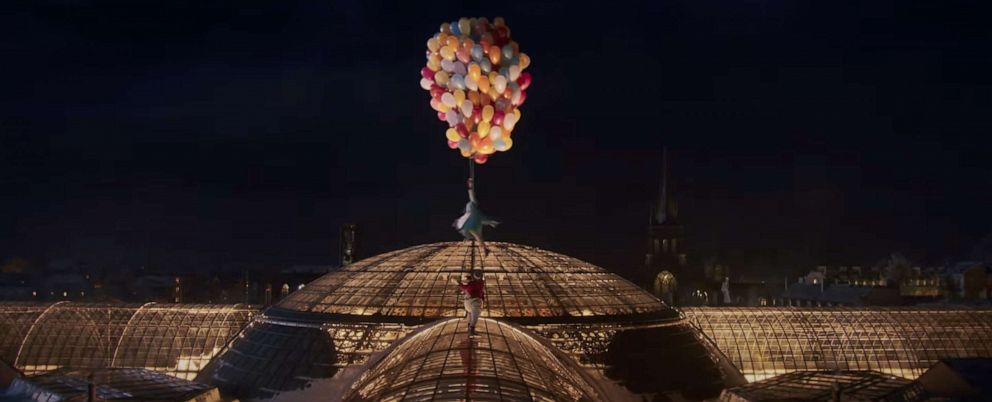
Wonka, of course, isn’t without its faults. The laundromat owners, while comically villainous, may intimidate younger viewers (and the aforesaid owners fall in love, giving the audience some cringy, mushy-gushy content played up for laughs). In addition (perhaps most subtly troubling) the police commissioner is addicted to bonbons and quickly gains weight in a disrespectful caractituer that may leave some viewers rightfully uneasy.
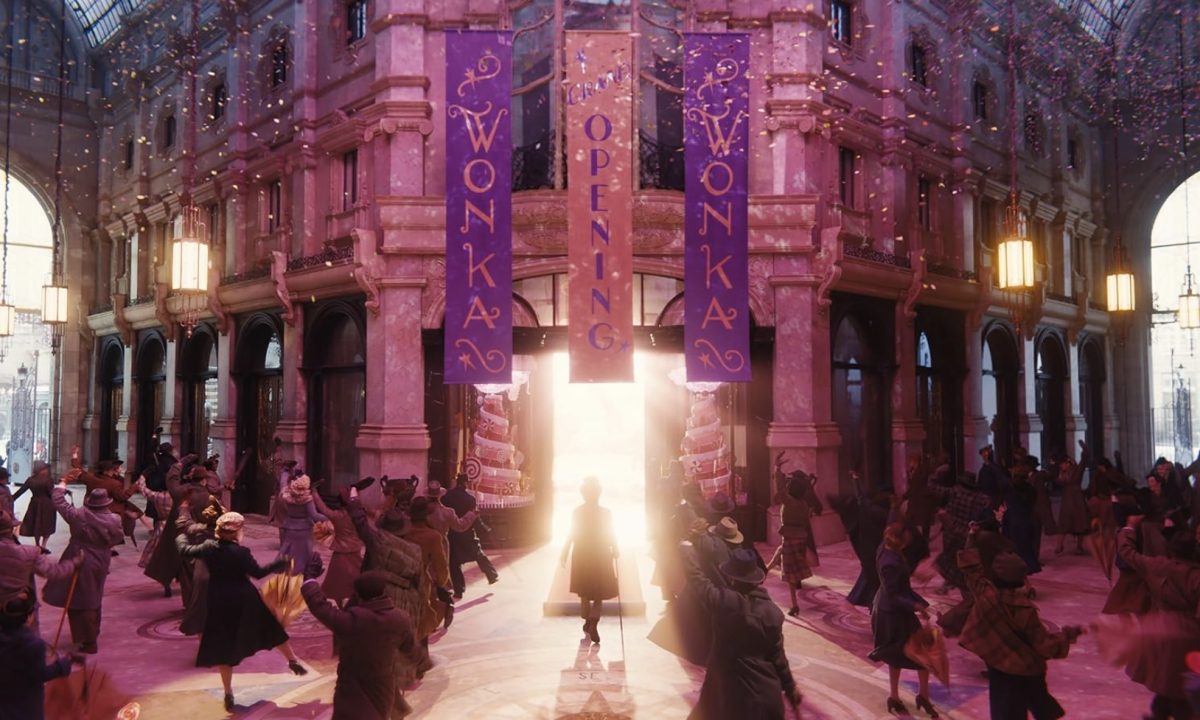
While these unsavory elements are worth considering–and the film certainly has its detractors– overall, Wonka is a movie both startling different and wonderfully nostalgic. (Kind of like Smarties. That chalky texture gets me everytime).In a world where children and adults are increasingly more desensitized and cynical, and in a time where daydreaming has become a lost art, Wonka stands as a tribute to imagination. Like an innocent, fresh, rollicking, Broadway-filled song, Wonka is all about reclaiming the joy of youth–even in the face of very real trouble.
‘night to day’
I have to confess–Wonka is one of my favorite movies–ever. Admittedly, it can be syrupy-sweet at points, despite its poignant message and stellar acting. But what gets me everytime is the vision Wonka provides of joy and beauty.

While most people in the movie are grasping after power, money, and (of course) chocolate, Willy and his friends are increasingly opening their eyes to wonder and kindness. In Wonka, it’s like there’s a big piece of blackout paper covering the sun and shrouding everything in darkness. For our heroes, however, the more they squint and search for light, the more they begin to poke holes in the paper. The sun starts streaming in and the big secret’s revealed: there’s more where that came from.
This reminds me a bit of life. Desperate darkness and injustice comes because of sin. We’re all aware of that sad truth on varying degrees. Something that I think coexists, however, is God’s mercy and acts of power in the world. Although we can’t always see the way God is redeeming, healing, beautifying, and putting-back-upright the world, every now and then we get a glimpse, like a poke in a curtain. The sunshine comes in and we’re reminded that all the darkness we see is only temporary.
C.S. Lewis says it wonderfully in The Lion, the Witch, and the Wardrobe. In an ancient prophecy describing Aslan, a Lion symbolizing Jesus Christ, it was foretold that:

Wrong will be right, when Aslan comes in sight,
At the sound of his roar, sorrows will be no more,
When he bares his teeth, winter meets its death,
And when he shakes his mane,
we shall have spring again.
As a character sings of Willy Wonka, “He turns night to day—But don’t get carried away.” But that’s kinda the whole point of Wonka. Sometimes it’s okay to get carried away by the truth that there is light in this world, and–like a ragtag group of chocolatiers–that it’s never going to be snuffed out by the darkness.
Conclusion
In a strange, creative, chocolate-covered, song-and-dance kinda way, Wonka reminds us that joy, hope, kindness, and creativity are powerful gifts that ought to be celebrated. In between scenes of enchanted chocolate, burgling Oompa Loompas, and stampeding giraffes, Wonka also reminds its audience that beauty and goodness is closer than we might think. Sometimes it just takes some pure, God-granted imagination to see what was real all along. 🍫
Thanks for joining us in this week’s exploration of the chocolate-covered world of Wonka! I hope the bittersweet tale of kindness and creativity reminds you that God’s redemptive work of healing in the world is always triumphing and flourishing, even when we can’t see it.
Join us next week for a look at the gritty side of life–this time in a story that is a bit more historical, musical, and definitely more filled with rap. See you then!
~Joy Holiday
Credits
Title picture: Peakpx, edited in Canva


 Joy H. Books

Leave a comment