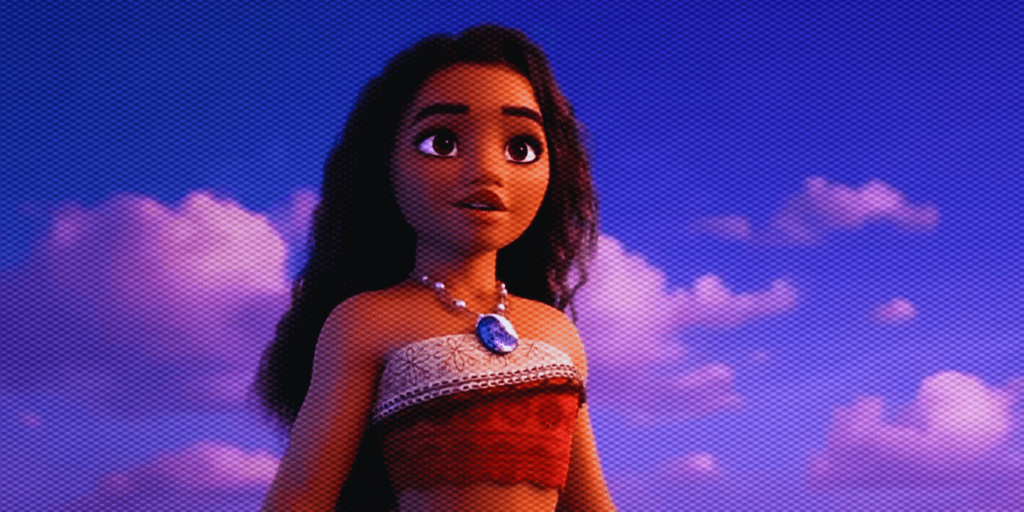
MOANA 2: A REVIEW
a sacrifice to unite a divided sea
[SPOILERS AHEAD]
In November of 2024, Disney Animation Studios returned with a sequel to the beloved tale of Moana, Maui, and the people of Motunui. The story follows the little-older-and-wiser Moana who has a full life as a wayfinder for her close-knit community. As she discovers one new island after another, she learns that Motunui was once part of a connected ocean filled with diverse islands. When the storm god Nalo saw the beauty the harmony of islands had created, however, the seas were ripped asunder. Unless Moana (along with the help of friends old and new) can reunite the oceans, the destiny of her people lies in the balance (Miller, 2024).

Worth the popcorn?
Overall, Moana 2 is a community-centered, vibrant, and moving film that the majority of the family can watch (although some of the action sequences and mythology might be scary for very young viewers). Moana and her friends risk their lives to save their families and to find people they’ve never met. Throughout the voyage, characters grapple with the effect that their self-sacrificing actions have on others, how to overcome overwhelming odds, and the universal (and dare we say spiritual) importance of social connectedness.

And, while this might not be everyone’s opinion, I think the songs are absolutely fantastic. Some, like Beyond were deeply soulful (harkening back to How Far I’ll Go from movie #1), while Maui [Dwayne Johnson] delivered a show-stopping number worthy of a Rocky transformation scene. Fans might notice the songs mirror some of the original setup (there’s a “village” song, a Moana solo, a villain song, and a “Maui” song), but other fans might appreciate the nostalgic familiarity.
Moana 2 also provides viewers with a praiseworthy role model. In a world of good-guys known mostly for their beauty, strength, and wit, it’s good to see an increase of heroes known equally for their kindness. Throughout the sequel, Moana selflessly cares for her community, embraces people’s differences, and uses her unique talents to help others. By the end of her journey, Moana displays a kind of love that is, ultimately, so moving that we see sparkles of Christ-like sacrifice.
‘no shore left unexplored’
Here at Joy H. Books, we’re all about finding images of the Gospel in unlikely and creative places. In Moana 2, there’s happily a lot to go off of. The movie asks questions like, “Humans aren’t really made to live in isolation, right?” “What makes life fulfilling?” and “What’s harmony really look like?”
For Moana, she realizes that her people are not whole until they are connected with others. She’s so sure, in fact, that her village has not lived out its full potential that she embarks on the most dangerous voyage of her life in an effort to unite the oceans. Unsurprisingly, many Christian theologians have said the same thing about us as humanity (cool authors like C.S. Lewis, Dorothy Sayers, John Mark Comer, Augustine, and lots others).

I think we’re all looking for what it actually means to be a fulfilled, happy human. Friends and family? Most would say “check.” Also, a lot of people include spirituality, community, hobbies, and vocations in their concept of human thriving. What is universal about all of us–and about Moana and her community–is that we long to find this ultimate way of being human, of fulfilling the uniqueness God gave to people (Comer, 2024). I bet a lot of us would jump in a boat and sail across the ocean on a crazy quest to find it.
In his books Garden City and Practicing the Way (where most of this post has been inspired from), author John Mark Comer concludes that this human-thriving-thing is what God teaches us. When we were in the Garden of Eden, we had it. One day in Heaven, we’ll have it again. The exciting part is that, in the voyage in-between, Jesus is making us more and more into those God-filled, purpose-rocking people (Comer, 2024). He knows what it means to be fully human: and His words in Scripture show us the rich, God-centered, love-filled, Jesus-following way to live that out.
And, to highlight the poignant message Moana 2 hammers home, part of that looks very much like living in harmony with others.
Conclusion
Moana 2 is basically about a Christ-like hero’s quest toward humanity’s purpose. (pretty deep for a kid’s movie, right?) The storm-god Nalo, much like evil in the world, likes to divide people and splinter them apart. But God is a master at restoration, community, and growing. Turns out, Moana’s story can teach us to never settle for less than God’s vision for humanity. As John Mark Comer writes in Garden City,
“We’re called to . . . make a Garden-like world where image bearers can flourish and thrive, where people can experience and enjoy God’s generous love. A kingdom where God’s will is done “on earth as it is in heaven,” where the glass wall between earth and heaven is so thin and clear and translucent that you don’t even remember it’s there” (Comer, 2024).
That’s a pretty good purpose to pursue.
All I think is left to say is: can I get a Chee-Hoo! 🌴
Join us next week for a new journey into the movies! Next Thursday, we’ll look at another cinematic tale at what it means to be human. This time, though, the lesson will come from an unlikely source: a video game character obsessed with bubblegum ice cream, hero-stuff, and kindness. See you then! ~Joy Holiday
READ MORE
Comer, J. M. (2017). Garden city. Thomas Nelson.
Comer, J. M. (2024). Practicing the Way. WaterBrook.
Miller, D. L. [Director]. (2024). Moana 2.Walt Disney Studios Motion Pictures.


 Joy H. Books
Leave a comment